Short answer: Count the cartons against the packing list, pull a random sample sized by AQL (for a 5,000-piece lot at General Inspection Level II that is 200 boxes), check each against the approved sample for artwork, colour, size, construction and function, and accept or reject the lot on the defect counts you agreed before production.
Before the goods arrive
- Keep the approved pre-production sample and the signed-off artwork; they are the reference, not memory or a screen. See the pre-production sample checklist.
- Agree in writing what counts as critical, major and minor, the AQL for each, and what happens to a lot that fails.
- Have the drawing with interior and exterior dimensions; the measuring guide explains which is which.
Step 1: Count and check the cartons
Match carton count, carton marks and quantity per carton to the packing list. Photograph any crushed or wet carton before opening it; transit damage is a claim against the carrier or forwarder, not a production defect. For crush and scuff patterns see preventing packaging damage.
Step 2: Pull a random sample by AQL
AQL sampling (ISO 2859-1, or its US twin ANSI/ASQ Z1.4) sets how many boxes to check and how many defects are allowed. General Inspection Level II is the usual level for a visual check. Read the sample size and accept/reject numbers for your lot size from the standard's tables; the row below is one worked example.
| Lot size | Level II code / sample | Major defects, AQL 2.5 | Minor defects, AQL 4.0 |
|---|---|---|---|
| 3,201–10,000 pcs (e.g. 5,000) | L / 200 boxes | accept if 10 or fewer | accept if 14 or fewer |
Source for this row: QualityInspection.org, AQL 2.5 samples and inspection levels in ISO 2859-1. Many buyers allow zero critical defects. Pull boxes from different cartons, not the top layer of one.
Step 3: Check each sampled box
| Check | How | Typical class |
|---|---|---|
| Artwork and text | Compare logo, copy, barcode and spelling with the approved artwork | Critical if wrong or unreadable |
| Colour | Side by side with the approved sample under the same light | Major if outside the agreed limit; see colour matching |
| Dimensions | Interior and exterior with a rigid ruler or caliper against the drawing tolerance | Major if the product does not fit |
| Construction | Wrap adhesion, corners, lid fit, sleeve tension | Major if it peels or will not close |
| Function | Magnet closes, drawer slides, insert holds the product | Major if it fails |
| Finish | Foil, embossing, scuffs and glue marks at arm's length | Minor if cosmetic only |
Step 4: Record and decide
Log each defect with a photo, box number and carton number, then total them by class. If majors or minors exceed the accept number, the lot fails; act on what you agreed before production (sorting, rework or replacement) and send the supplier the log, not just a summary. Keep the sample boxes until the matter is closed.
Ordering with us: rigid and magnetic boxes start at 100 pcs per size. Orders below 500 pcs carry a noticeably higher unit price, so we recommend 500 pcs or more. Every order goes through a pre-production sample (3–5 days) before production (12–15 days).
Formats to Inspect Against a Golden Sample

Magnetic Closure Rigid Box
Wrapped rigid board with a concealed magnetic flap.
From 100 pcs · best price 500+View product →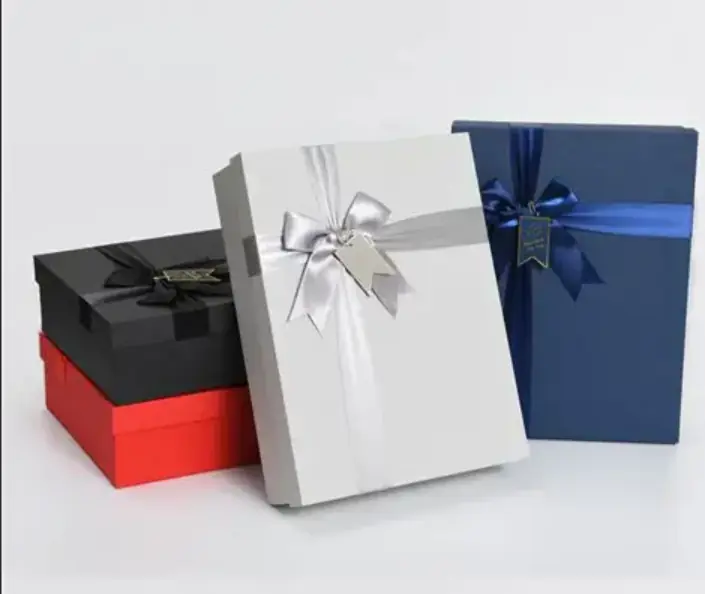
Lid & Base Gift Box with Ribbon
Two-piece rigid box; the lid lifts off for a slow reveal.
From 100 pcs · best price 500+View product →
Sliding Drawer Box
Sleeve and tray with a ribbon pull; the product slides into view.
From 100 pcs · best price 500+View product →
Magnetic Box with Fitted Insert
Insert cut to the product so every item sits still.
From 100 pcs · best price 500+View product →Ready to price one of these? Send a quote request — the reply includes a free 3D mockup.
Frequently Asked Questions
LuxoPack is a custom rigid box factory in Shenzhen. Formats: magnetic gift boxes, rigid gift boxes, all products. Related reading: Gift Box Size Guide, How to Measure a Box, Dimensional Weight Calculator, MOQ Guide.