The box gets the credit. The insert does the work. When a candle jar arrives cracked, a serum bottle arrives leaking, or a gift set arrives sounding like a maraca, the box design was almost never the failure point — the insert was. Yet in most packaging briefs we receive, the insert is one line ("+ insert") while the finishes get a paragraph.
This guide reverses that. Below is how a factory actually chooses between die-cut EVA foam, molded paper pulp, cardboard, and velvet-wrapped platforms — with unit cost ranges, tooling realities, the sustainability math that US EPR laws just made financial, and the two physical tests that tell you whether your insert works before 5,000 units get on a boat.
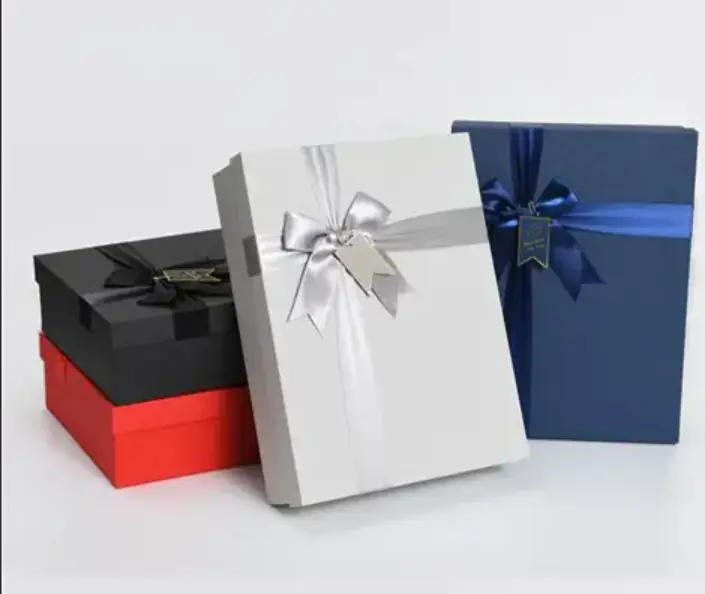
Terms first: an insert is the die-cut or molded piece that immobilizes the product inside the box. Crinkle paper, tissue and air pillows are void fill — they occupy space but don't locate anything, and they're not covered here. All prices below are typical 2026 EXW factory ranges at mid volumes; cavity count, size and material grade move them, so quote against your actual product dimensions.
The four jobs of an insert
Rank these for your product before choosing a material. An electronics brand ranks shock absorption first; a jewelry brand ranks presentation; a subscription box shipping 5,000 units a month ranks packout speed higher than either. The material follows the ranking.
When several products share one presentation box, continue with the multi-product gift set packaging workflow to lock orientation, weight distribution, removal order and the loaded-sample approval gate.
Die-cut EVA foam: the protection benchmark
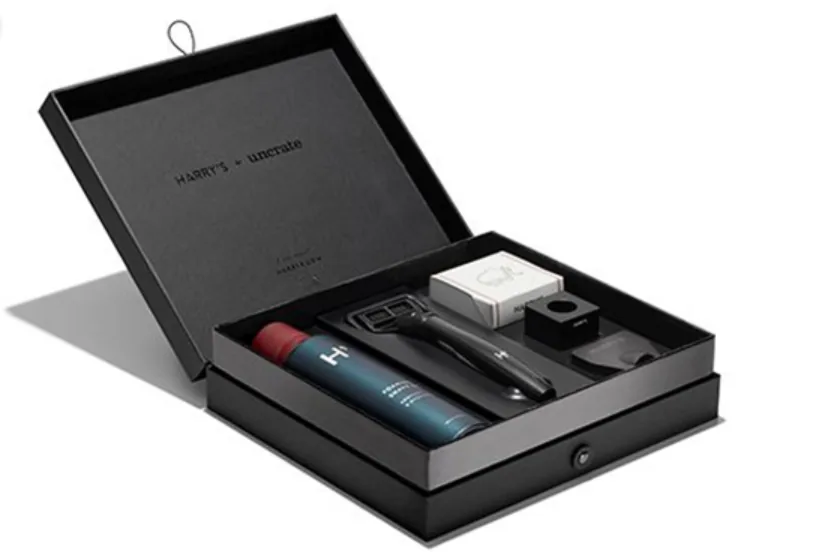
EVA (ethylene-vinyl acetate) is the closed-cell foam you find inside camera cases and $200 skincare sets. It die-cuts to ±0.5 mm precision, comes in densities from soft to shoe-sole firm (typical packaging grades run around 38-60 kg/m³), and can be supplied plain, flocked, or wrapped in velvet for prestige interiors. For glass, ceramics and electronics it is simply the best shock absorber per millimeter of wall you can buy at packaging prices. Its cheaper cousins EPE and XPE (polyethylene foams) protect nearly as well but look and feel like shipping supplies — fine hidden inside a mailer, wrong in a gift box.
Costs: die-cutting tools are cheap (often under $150), so EVA carries almost no tooling barrier; units run roughly $0.25-1.50 depending on block size and cavity complexity, $0.50-2.00 velvet-wrapped. The catches: EVA is a plastic — generally not curbside-recyclable, and it turns your paper box into a mixed-material pack, which now has a fee consequence (more below). It also ships as cut volume: foam doesn't fold flat, so it inflates freight cube on long runs. And customers who chose you for a "plastic-free" claim will notice a slab of polymer in the lid.
Molded paper pulp: 2026's default eco swap
Molded pulp is recycled paper fiber formed in a mold — and the material has had a glow-up. The rough, grey egg-carton grade still exists for industrial work, but what premium brands now spec is fine thermoformed pulp: pressed smooth between heated molds, available in bleached white, kraft brown or dyed shades, with crisp edges that photograph as a design feature rather than a compromise. Apple-style electronics trays are this material. It's plastic-free, curbside-recyclable with the box, and compostable — the full sustainability story in one component.
Costs flip versus foam: units are cheap at scale — roughly $0.15-0.80 — but the formed mold is real tooling, typically a few hundred dollars per design at Chinese factories (more for multi-cavity thermoformed work). That math kills pulp for 100-unit runs and makes it excellent from about 1,000 units up. Protection: well-designed pulp is close to foam for edge and base impacts and entirely adequate for bottles, jars and cosmetics; foam still wins on point impact for heavy items. Two practical cautions from production: pulp softens if it ships through humidity unwrapped inside unsealed cartons, and deep narrow cavities (thin vials) mold less cleanly than shallow wide ones — geometry matters, so share the product drawing before committing.
Cardboard and paperboard: organization at a price that rounds to zero
Die-cut card dividers, platforms and French-fold trays are the cheapest insert class made — typically $0.05-0.30 per unit with tooling as cheap as foam's. They're mono-material with the box (best possible recycling story), they fold flat (no freight penalty), and uniquely among inserts they print: a branded platform with a message under the product costs cents and reads as intention. The limit is physics: card positions products, it doesn't cushion them. A divider grid keeps twelve candle jars from hitting each other — genuinely useful — but contributes almost nothing when the whole carton hits concrete. Use card for soft goods, tins, apparel, multi-item organization, and as the presentation layer above a protective layer; don't use it as the only thing between loose glass and the courier network.
Velvet and satin platforms: the prestige hybrid
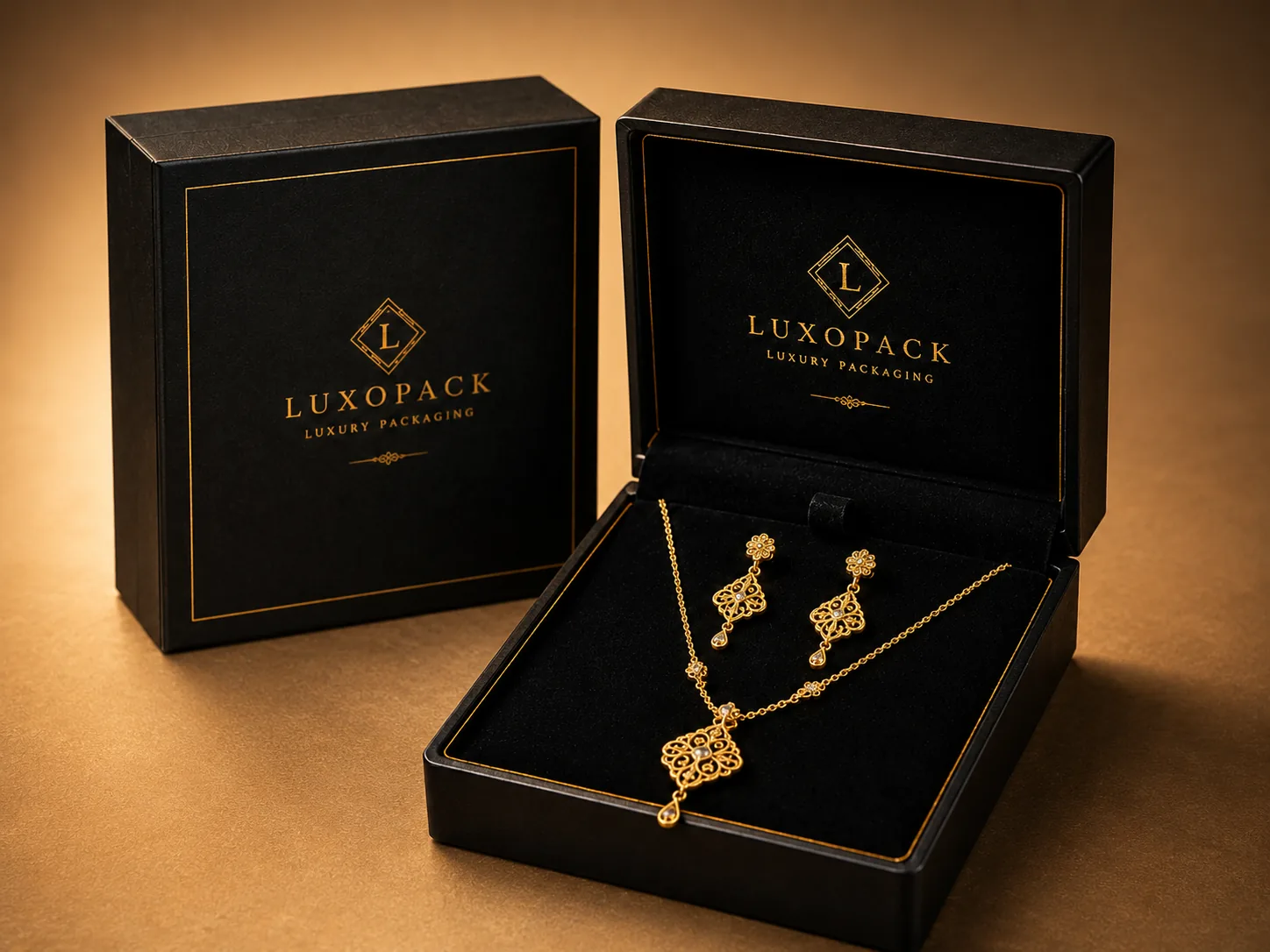
For jewelry, watches and small leather goods, the insert is the product display: velvet or satin wrapped over a shaped foam or board core, with slots, pillows or hooks. Protection needs are modest (the products are small and light); what you're buying is the surface and the fit — a pendant that lies flat, a watch pillow sized to the strap. Typical adds run $0.30-1.50 over a plain insert depending on fabric and complexity. This is standard spec on our jewelry boxes and watch boxes, and the modular version — swappable velvet trays over a common base — is how brands run one box across a product family (see the modular insert magnetic box).
The decision matrix
| Criterion | EVA foam | Molded pulp | Cardboard | Velvet platform |
|---|---|---|---|---|
| Shock protection | Benchmark | Good (edge/base) | Organization only | Adequate for small items |
| Unit cost (typical EXW) | $0.25–1.50 | $0.15–0.80 | $0.05–0.30 | $0.50–2.00 |
| Tooling | Die-cut, cheap | Mold, few hundred $ | Die-cut, cheap | Die-cut + wrapping labor |
| Ships flat? | No — cut volume | Nests partially | Yes | No |
| Recycling / EPR position | Plastic; mixed-material pack | Curbside with the box | Mono-material, best case | Mixed-material |
| Branding surface | Color/flocking only | Deboss possible | Fully printable | Fabric color + emboss |
| Sweet spot | Glass, ceramics, tech | Eco-positioned brands, 1,000+ units | Multi-item sets, soft goods | Jewelry, watches |
The two tests that catch a bad insert before it ships
The shake test. Pack the pre-production sample exactly as it will ship. Hold it at ear level. Shake it, rotate it, shake again. Any audible movement means the cavity is oversize — ask the factory to tighten it by about 1 mm and re-cut. The target clearance is 2-3 mm total: silent in transit, but smooth enough that packout staff aren't forcing product into foam and customers aren't wrestling it out. This test costs nothing and catches the single most common insert failure.
The drop test. From about 30 cm — waist height is the honest simulation — drop the packed box on a corner, then an edge, then a face, twice each, onto a hard floor. Open it. If the product is intact, silent and still located in its cavity, the insert passed. If your product is heavy (over ~2 kg), glass in glass contact, or ceramic, don't stop at the kitchen-floor version: ask the factory to run an ISTA-style transit simulation or add a corrugated outer with dividers — the gift box insert and the shipping protection are a system, and our shipping damage guide covers the outer half.
The EPR angle: your insert choice now has a fee attached
Since US state packaging EPR programs began phasing in, the packaging you ship into regulated states is reported by material and weight, and fees are eco-modulated — recyclable mono-material formats pay less, hard-to-recycle and mixed-material formats pay more. That changes the insert calculus in two specific ways. A paper box with a pulp or card insert stays a mono-material pack and sits on the cheap side of the fee schedule; the same box with glued-in EVA becomes mixed-material. And because fees scale with weight, note that pulp often weighs more than the EVA it replaces — the fee delta usually still favors pulp, but it's worth running both numbers. If protection genuinely requires foam, the design fix is simple: leave it un-glued so the customer lifts it out and the paper shell recycles cleanly. We've broken down which states, thresholds and deadlines apply in our US packaging EPR guide.
Not sure which insert your product needs?
Send us the product dimensions and weight (a photo next to a ruler works) and we'll recommend an insert construction, quote it inside your box at 100 / 500 / 1,000 pieces, and cut a pre-production sample in 3-5 days so you can run the shake and drop tests yourself.
Get an insert recommendationChoosing in practice: a 6-step spec path
- Rank the four jobs — immobilize, absorb, present, packout speed — for your specific product and channel.
- Weigh the product and note its material. Under ~300 g and non-fragile, card platforms are probably enough; loose glass or ceramics push you to foam or fine pulp.
- Check your volume against tooling. Under ~500 units, die-cut (foam or card) avoids mold costs; from ~1,000 units, pulp's mold amortizes to noise.
- Decide the sustainability story once, pack-wide. If the brand says plastic-free, that includes the insert — pulp or card, no exceptions customers can photograph.
- Prototype and run the shake and drop tests on a real pre-production sample, not a rendering.
- Re-check the EPR math if you ship meaningful volume into California, Oregon, Colorado or the other regulated states — material and weight now land on a fee schedule.
The insert is engineering pretending to be upholstery. Spend one extra revision on it now — a re-cut sample costs days — versus discovering in month two that "arrived broken" reviews are your real packaging spend.
Frequently Asked Questions
LuxoPack cuts EVA, molded pulp, card and velvet inserts in-house alongside the boxes they fit — one factory, one tolerance chain. Related reading: Gift Box Materials Guide, US Packaging EPR Fees 2026, Reduce Shipping Costs & Prevent Damage, Custom Perfume Boxes Guide, Modular Insert Magnetic Box.