Jewelry box sizes start from the piece, not from a catalogue. A ring, a chain, a bangle and a watch each need a different footprint, height and insert. This guide gives the common interior sizes we use as starting points for each piece, shows how to measure your jewelry, and lists what to send so a factory can size the box before sampling.
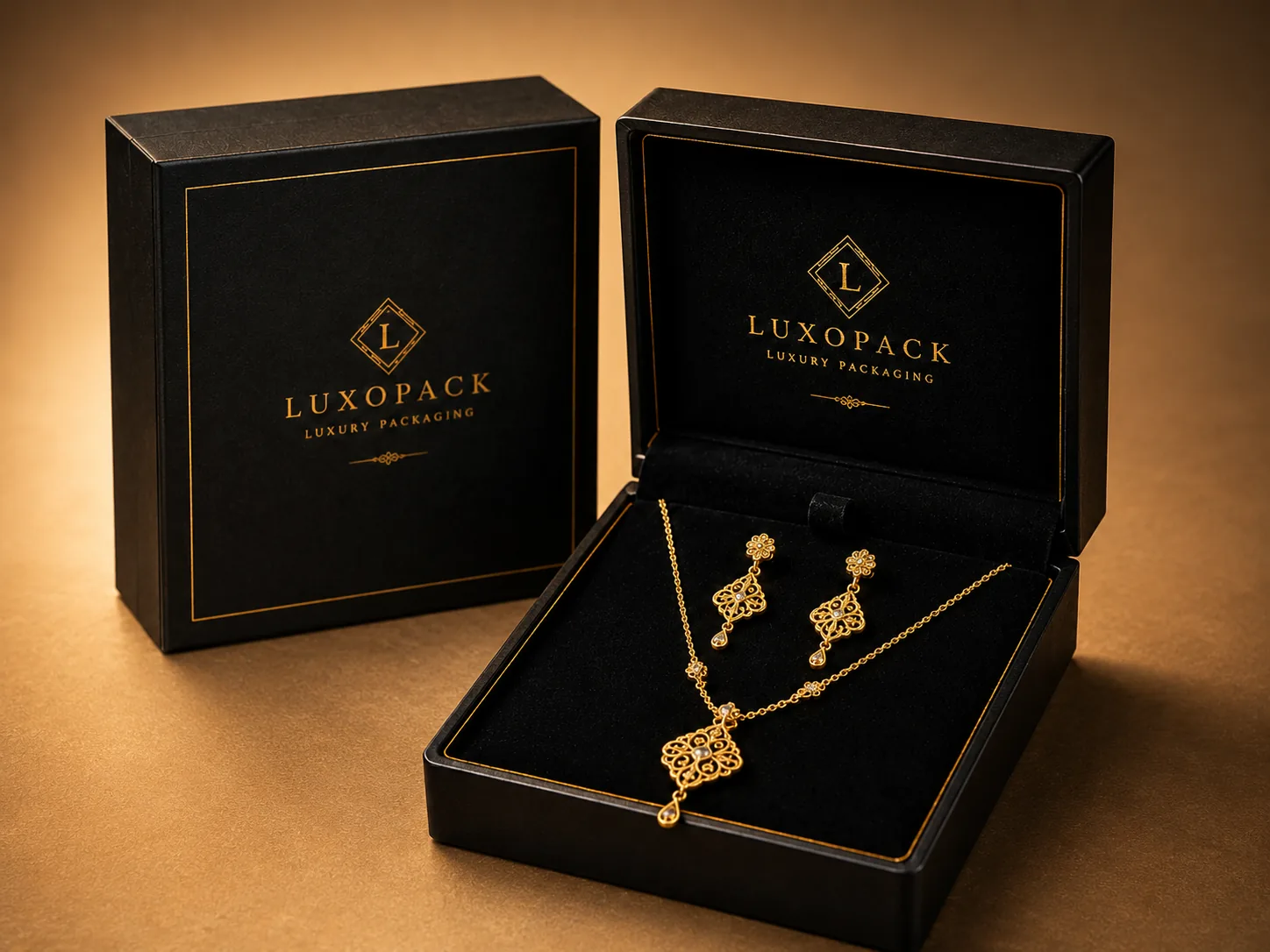
Common jewelry box sizes by piece
Interior sizes, length × width × height. These are starting points for specification review, the same values as the master chart in our gift box size guide; the final size is confirmed against the packed piece.
| Box | Interior (mm) | Interior (in) | Typical use | Formats |
|---|---|---|---|---|
| Ring box | 50 × 50 × 40 mm | 2.0 × 2.0 × 1.6 in | Single ring in a slotted pillow or velvet slot | Ring boxes |
| Earring / pendant box | 90 × 90 × 35 mm | 3.5 × 3.5 × 1.4 in | Studs on a pierced card, or a short-chain pendant | Presentation boxes |
| Necklace box | 180 × 180 × 40 mm | 7.1 × 7.1 × 1.6 in | Flat format keeps the chain straight on a pad | Magnetic rigid boxes |
| Bracelet / bangle box | 100 × 100 × 70 mm | 3.9 × 3.9 × 2.8 in | Bangle or cuff on a pillow or C-clip | Bracelet boxes |
| Watch box | 110 × 110 × 80 mm | 4.3 × 4.3 × 3.1 in | Watch on a cushion that wraps the strap | Watch boxes |
Presentation and drawer box sizes
Boxes that hold more than one piece are sized from the set. Our product pages list these common sizes:
- Velvet presentation box: pendant 90 × 90 × 40 mm · set 180 × 140 × 45 mm · bridal 220 × 180 × 55 mm.
- Leather jewelry drawer box: mini 120 × 90 × 60 mm · classic 180 × 130 × 80 mm · grand 240 × 170 × 90 mm.
How to measure each piece
| Piece | What to measure | What it changes |
|---|---|---|
| Ring | Band width and the height of the stone or setting above the band | Slot width in the ring pillow and the lid height |
| Earrings | Drop length and post length; studs or hooks | Card or pad size and the depth behind the card |
| Necklace / pendant | Chain length laid flat, pendant size and thickness | Flat box footprint and where the hook or slot sits |
| Bracelet / bangle | Outer diameter and height of a bangle; length of a chain bracelet | Square or long box, and pillow or C-clip size |
| Watch | Case diameter and thickness, strap width | Cushion size and box height |
If the range has several sizes, measure the largest piece. Sending a physical sample of each piece is the most reliable way to have slots cut to fit.
Interior, exterior and clearance
Give the factory the interior size or the piece itself. The outside size is the interior plus the board and covering on each side, so two boxes with the same interior can differ on the outside depending on the wrap. A worked example from our size guide: a product measuring 90 × 60 × 30 mm with 3 mm clearance on each side needs a minimum interior cavity of 96 × 66 × 36 mm. Velvet, foam and pads take space, so confirm the final dieline and a loaded sample before production.
Board: for boxes up to 150 mm on the longest side, 1200 gsm greyboard (about 2.0 mm) keeps a small jewelry box rigid without adding cost; larger set boxes move to heavier board.
Choosing the insert
- Rings: a slotted ring pillow or velvet ring slot, single or double.
- Earrings: a card with pierced holes or a flat velvet pad.
- Necklaces: a pad with a hook or slot that holds the chain straight.
- Bracelets and bangles: a pillow or C-clip.
- Watches: a cushion that wraps the strap.
See the luxury jewelry packaging guide for which box suits each piece and the insert comparison for materials.
Send your pieces, we size the boxes
Send the piece sizes or a sample of each piece, the box style and quantity per size. Rigid jewelry boxes start at 100 pcs per size, with a physical sample in 3–5 days.
Size my jewelry boxes on WhatsAppWhat to send for a quote
- Pieces: type and the measurements above, or a sample of each.
- Box style: lid-and-base, magnetic, drawer, presentation or leather-look.
- Insert: per piece, or ask us to suggest one.
- Covering, colour and logo method.
- Quantity per size, destination and the date you need the boxes.
Frequently Asked Questions
LuxoPack is a custom rigid box factory in Shenzhen. Jewelry box formats: ring boxes, bracelet boxes, all jewelry boxes. Related reading: Gift Box Size Guide, Jewelry Packaging MOQ Guide, Best Materials for Luxury Jewelry Boxes, Luxury Jewelry Packaging Guide.