One r/ecommerce seller reported a $15 shipping increase after a parcel was measured only a couple of centimeters larger. Another recent thread asked whether multi-depth boxes could control cost without stocking many sizes. Both questions point to the same design gate: calculate dimensional weight from the final outside parcel before approving a custom box.
Short answer: carriers can charge on the higher of actual weight and dimensional weight. Right-size the complete parcel, not only the product box. Lock the product, insert and outer shipper dimensions together; calculate with the current rule for your carrier account; then run protection tests before removing more material.
If a fulfillment partner receives the product and packaging separately, use the 3PL-ready packaging and kitting handoff to control component versions, assembly steps, pilot approval and the final shipper.
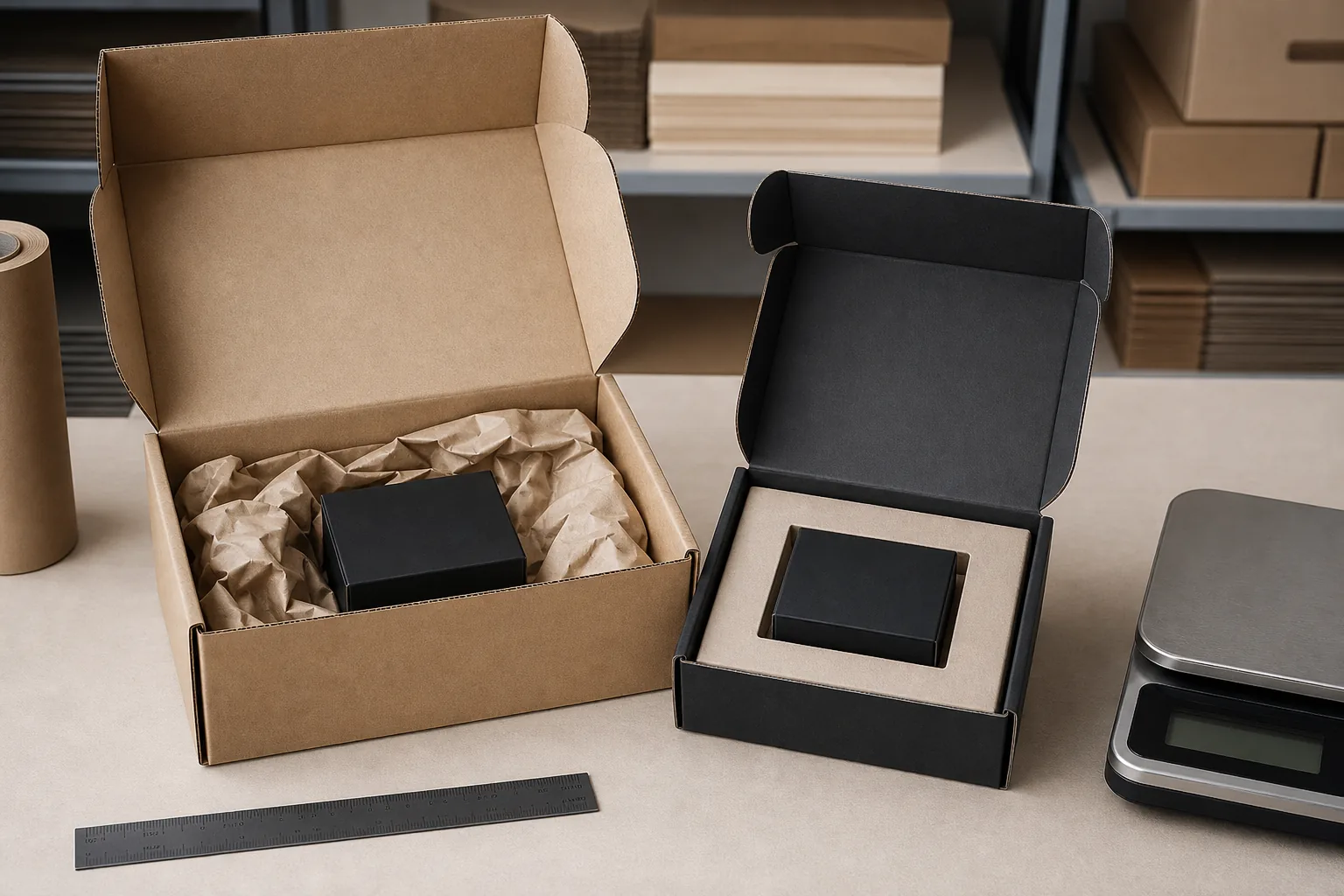
What DIM weight means for a packaging buyer
Dimensional weight converts parcel volume into a rating weight. The carrier compares that result with the actual scale weight and generally rates the higher figure, subject to the service and your contract. FedEx's current U.S. guidance says to multiply length, width and height in inches and divide by 139 for the listed U.S., Puerto Rico and international shipments. It also instructs shippers to follow its rounding rules.
Use that formula as a planning example, not a permanent universal constant. Carrier divisors, thresholds and negotiated terms can differ or change. Confirm the current method for the service you actually buy before a production decision.
Worked example: the same 5 lb product in two parcels
| Outer parcel | Volume | DIM result using 139 | Planning billable weight |
|---|---|---|---|
| 16 x 12 x 10 in | 1,920 in³ | 1,920 / 139 = 13.81 | 14 lb, because DIM exceeds 5 lb actual |
| 14 x 10 x 8 in | 1,120 in³ | 1,120 / 139 = 8.06 | 9 lb, because DIM still exceeds 5 lb actual |
The smaller parcel reduces the planning billable weight by five pounds without changing the product. The dollar difference depends on zone, service, surcharges and account rates, so this article does not invent a universal savings percentage. Put both dimensions into the carrier tool used by your fulfillment operation.
Design from the product outward in four layers
- Product envelope: maximum length, width and height, including caps, hinges, cables or irregular protrusions.
- Restraint layer: insert, corner pad, wrap or cavity needed to stop movement and protect vulnerable surfaces.
- Presentation box: the branded retail or gift box, including board and wrap thickness.
- Shipping system: corrugated outer carton plus the clearance and protection required for the route.
The carrier measures layer four. Every millimeter added inside can propagate to that outside dimension, especially when a thick decorative box forces a larger shipper. This is why the packaging engineer, designer and fulfillment team should approve one dimensional drawing instead of optimizing separate files.
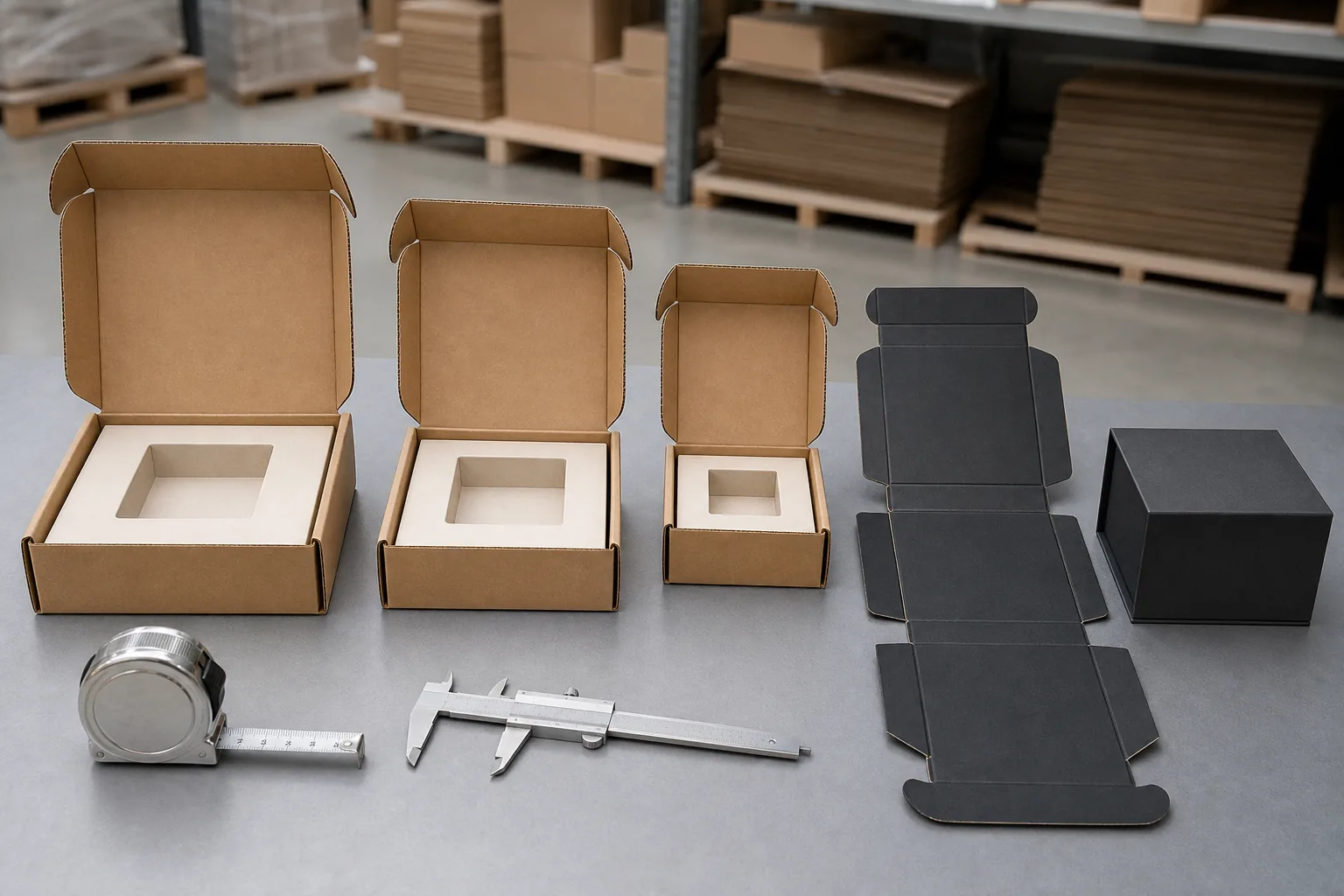
Where right-sizing usually finds space
One size, several sizes or a multi-depth box?
A single universal box minimizes purchasing complexity but can maximize empty space. A large size library improves fit but consumes storage locations and forecasting time. A multi-depth corrugated shipper can serve several order heights, although the scoring and closing method must still be evaluated for strength and pack-out labor.
Use order history to group baskets by packed outside dimensions. If three clusters cover most shipments, test three right-sized shippers. If height changes but the footprint stays stable, a multi-depth option may be practical. If both footprint and height vary widely, one multi-depth box will not solve the cube problem.
Presentation boxes and shipping boxes are different
A magnetic rigid gift box is designed for presentation and repeat opening. It is not normally the parcel carrier's outer shipping container. Place it inside a corrugated shipper sized to the assembled gift box and required protection. If inbound freight from the packaging factory is the problem, choose a foldable magnetic structure. If parcel DIM is the problem, reduce the assembled pack and outer shipper.
For direct-to-consumer orders where a keepsake box is unnecessary, a right-sized custom mailer box with a fitted insert can combine branding and shipping protection in fewer layers.
Pre-production checklist
- Measure final packed external dimensions, including closure bulge and labels.
- Enter each proposed size into the current carrier rating tool for representative zones.
- Record actual packed weight and compare it with DIM weight.
- Pack the real product with production inserts, not hand-cut stand-ins.
- Test the complete parcel for movement, panel bulging, drops and scuffing.
- Ask the 3PL how it rounds dimensions and whether its system captures machine measurements.
Want the box dimensions reviewed before tooling?
Send product dimensions, packed weight, current outer parcel size and destination market. LuxoPack can propose a right-sized mailer or foldable presentation structure and return a dieline for review.
Review my package dimensionsSources and community signal
Reddit discussions identify the recurring buyer problem but do not define carrier policy. Formula and process references come from FedEx's official dimensional-weight guidance. Confirm current rules for your own carrier, service and contract.
Frequently Asked Questions
LuxoPack is an FSC-certified rigid box factory in Shenzhen (est. 2010), with custom rigid-box MOQ from 100 pieces. Related next steps: Custom mailer boxes, Foldable magnetic boxes, Gift box size guide, Request a custom quote.