Custom packaging becomes a fulfillment problem as soon as products, boxes and printed parts arrive from different sources. A useful handoff converts that material flow into controlled components, clear release gates and comparable quote inputs before stock reaches the selected 3PL.
Buyer answer: Treat every product, gift box, insert, card, label and shipper as a controlled component. Before launch, the brand and 3PL must agree receiving condition, component IDs, version control, inspection, kitting sequence, pack-out standard, pilot quantity and replenishment ownership. That shared record makes exceptions visible before an unapproved part enters finished inventory.
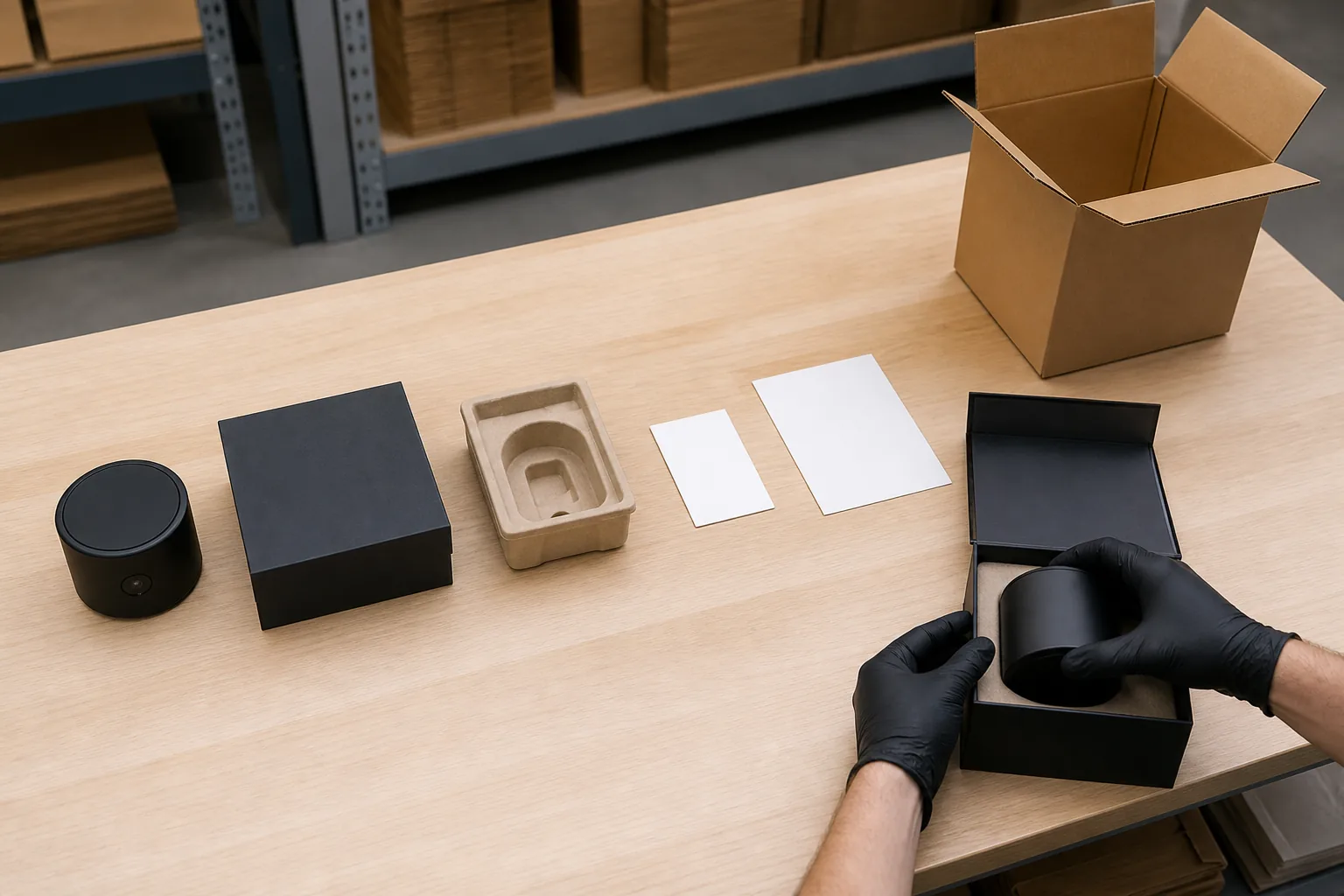
Define the handoff before placing inventory
The boundary is the complete sellable pack, not only the branded box. Start a component/SKU register with a unique ID, plain-language name, supplier, revision, unit of measure, quantity per kit, expected inbound condition, carton reference, storage needs and approval owner. Include the product, gift set box, insert, card, label and selected shipper as separate rows.
Agree which document controls each row and how obsolete versions are blocked. “Blue insert” is not enough when two revisions look similar. A receiving operator needs the expected identifier and quantity; a kitting operator needs the released revision; procurement needs a named party who replenishes it.
Build a receiving-to-return workflow
- Issue the supplier handoff. Give each supplier the component ID, revision, purchase-order reference, inner and master-carton quantities, carton marking, packing condition and ship-to instructions accepted by the 3PL.
- Identify inbound cartons. Put a readable reference on every carton and provide shipment notice data in the format the 3PL can use. Do not assume a packaging artwork code is also a warehouse identifier.
- Receive and inspect. Define count method, damage checks, acceptable evidence and the time window for reporting variance. Separate carton count from unit or bundle count.
- Quarantine exceptions. Hold damage, unidentified stock and version mismatches outside released inventory. Name who decides use, rework, replacement or disposal; the operator should not improvise substitutions.
- Store and replenish. Assign locations and reorder ownership for each component. Forecast in kits as well as units so a card or label cannot silently become the limiting part.
- Kit to a photo-based SOP. Show component IDs, orientation, sequence, quantity, label position, closure, acceptable appearance and an example of each exception. Version the SOP and record its effective date.
- Approve a first article or pilot. Build an agreed pilot quantity from released stock. The brand reviews the completed pack and records approval or corrections before a larger release.
- Check completed packs. Define count or weight checks, visual points, closure and label verification, sampling frequency, failed-pack segregation and rework authority.
- Select the outbound shipper. Match the completed pack and order profile to a suitable custom shipping box. Check external parcel dimensions using the dimensional-weight planning guide rather than choosing on presentation size alone.
- Close the loop. Code returns by reason, decide whether opened packs or components may re-enter stock, and reconcile component variance through scheduled cycle counts.
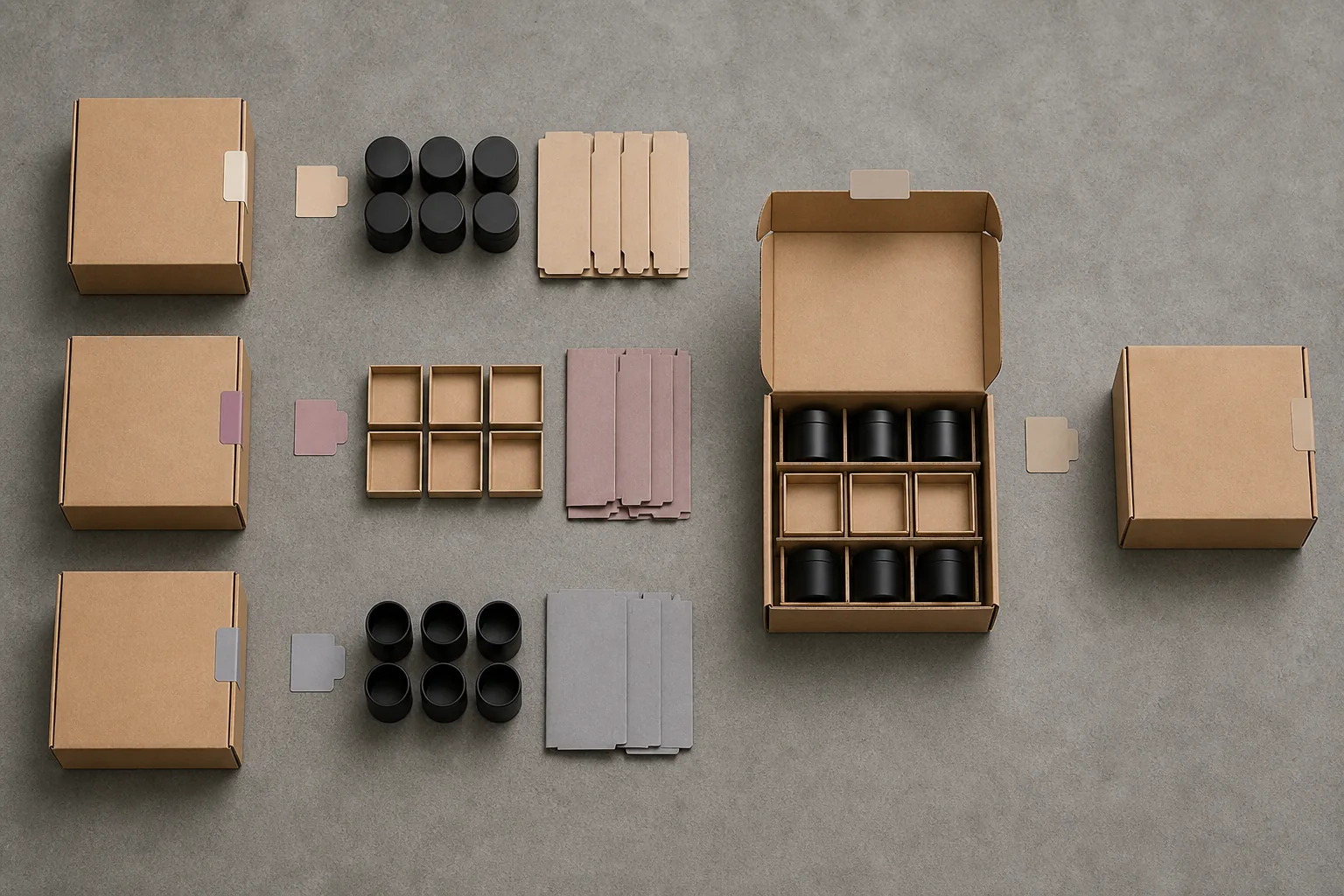
Choose where assembly happens
No route is universally cheapest. Compare the actual inventory, change pattern and transport path, then assign ownership in writing.
| Route | Inventory ownership | Labor visibility | Change flexibility | Freight / cube | Approval risk |
|---|---|---|---|---|---|
| Supplier pre-kitting | Finished kits may transfer as one item; define ownership at handoff. | Assembly may sit inside the supplier quote; request a separate scope. | Lower after sealed kits ship; changes can create rework. | Fewer loose receipts, but assembled packs may occupy more cube. | Approve before shipment; remote exceptions are harder to reverse. |
| 3PL kitting | Brand typically tracks loose parts and completed kits separately. | Touches, setup and rework can be quoted as warehouse lines. | Closer to order demand, subject to stock and SOP control. | Loose components use more locations; final shipper can follow order profile. | Pilot and first-article release must block premature production. |
| Brand / contract packer assembly | Brand defines transfers among assembler and fulfillment nodes. | Separate assembly contract can expose labor and supervision. | Useful for frequent creative changes, with extra coordination. | An added movement may increase handling and transport cube. | Two handoffs require matched counts, revisions and approval records. |
Worked example: a three-source pilot
Consider a hypothetical launch, not a LuxoPack client or warehouse result. Supplier A sends the product; supplier B sends the box and insert; the brand sends the insert card. The register creates four controlled rows: P-01 product, B-02 box, I-02 insert and C-03 card. Each row records supplier, revision, expected units, units per kit, inbound carton reference and release status.
The 3PL receives each shipment separately, counts to the agreed level and quarantines an I-01 insert found against the released I-02 row. When all four released components are available, operators build the agreed pilot batch from SOP K-01. Photos show product orientation, insert seating, card face, closure and completed-pack checks. The brand approves the pilot record before the remaining quantity is released.
The example exposes a practical constraint: 500 products and boxes do not create 500 kits if only 480 approved cards are available. The replenishment owner uses completed-kit demand, open orders, on-hand released components and expected loss or rework inputs agreed for that program.
Request a comparable 3PL quote
Ask every candidate for separate lines for receiving, storage, kitting labor, pick and pack, packaging materials, special handling, returns and cycle counts. Also request component counting and rework as distinct lines where applicable. These are quote inputs, not published or universal fees.
- Forecast inbound shipments, order volumes, peak pattern and pilot quantity.
- List components per kit, touches, expected carton quantities and storage profile.
- Attach the register, current SOP, example labels and acceptance criteria.
- Define receiving count level, inspection sample, quarantine response and reporting.
- State required service levels, order cutoffs, outbound destinations and return rules.
- Ask how setup, minimum activity, rush work, variance, rework and materials appear on invoices.
Normalize the answers into the same volume scenario before comparing totals. A low kitting line can be offset by different receiving, storage or rework assumptions. Use the quote form for the packaging specification, then give the selected fulfillment provider the same controlled package data.
Sources and scope
Two Reddit threads—one asking about a China-based fulfillment handoff and one asking whether a 3PL can assemble orders—are question signals only. They do not establish service, cost or performance evidence.
The current GS1 Logistic Label Guideline supports physical identification of logistics units and describes SSCC-based identification. It does not prescribe this article's commercial kitting workflow. Component registers, photo SOPs, quote lines and approval gates here are a commercial handoff method to agree with the selected 3PL.
Prepare the packaging side of the handoff
Share product dimensions, component list, pack-out sequence, intended shipper and destination so the packaging scope can be quoted against the same controlled brief.
Prepare a packaging RFQFrequently Asked Questions
Related next steps: review custom shipping boxes, compare gift set structures, calculate outbound parcel dimensions, or request a packaging quote.