A July 2026 r/smallbusiness question captured the seasonal packaging trap: a gift shop changes branding several times a year, suppliers want large minimums, and each campaign threatens to fill another storage room. The solution is not simply a smaller order of the same fully printed box. It is to separate evergreen structure from seasonal communication.
Short answer: keep one neutral core box and move the limited-edition message to a sleeve, belly band, ribbon, tissue, card or label. Forecast and reorder those flat components separately. Fully custom seasonal structures make sense only when the campaign volume and margin can absorb leftover inventory.
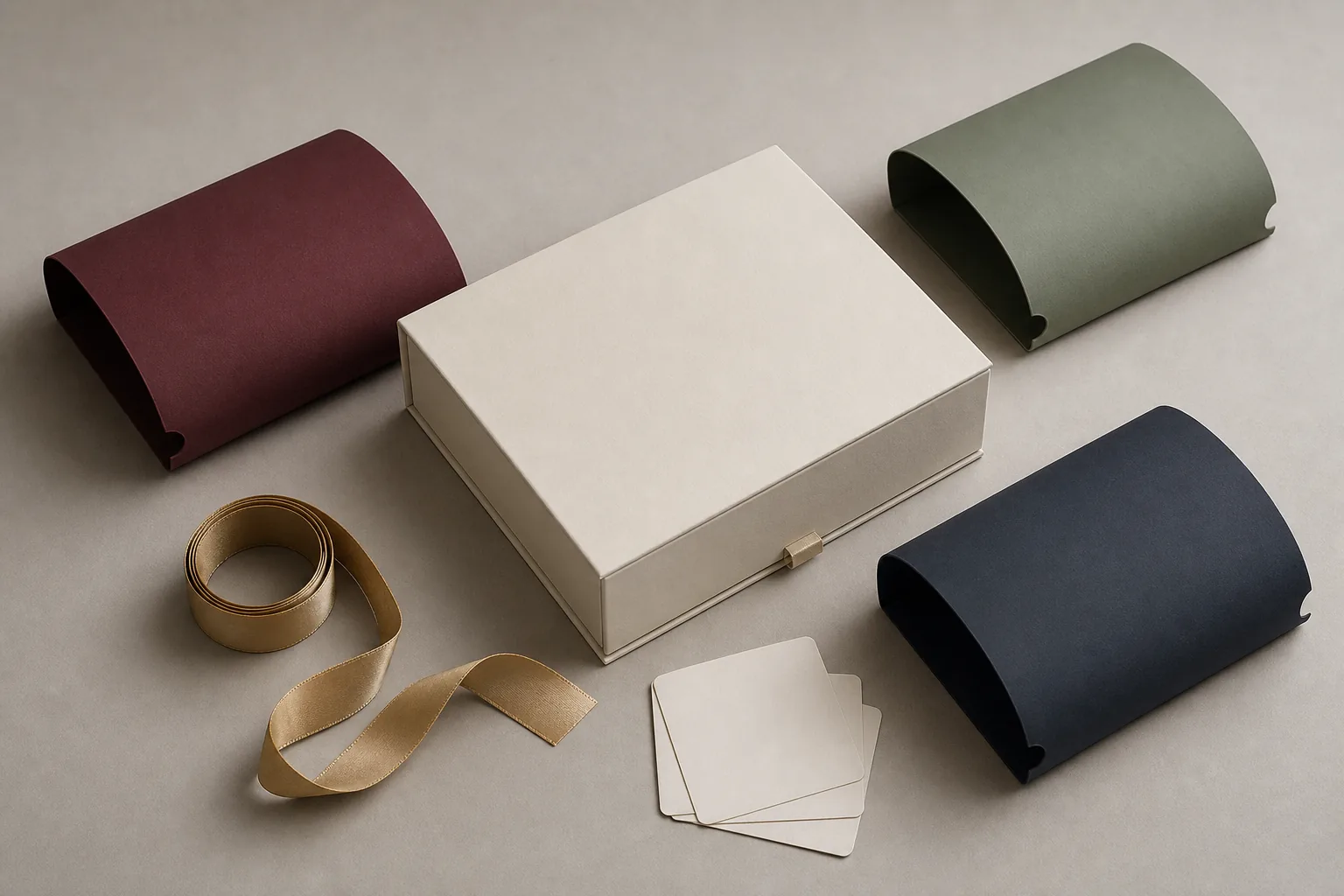
Use a three-layer seasonal packaging architecture
| Layer | Examples | Inventory role |
|---|---|---|
| Evergreen core | Neutral rigid box, mailer or lid-and-base box with a small permanent logo | Can be sold before, during or after the campaign |
| Seasonal identity | Sleeve, belly band, card, label, tissue or ribbon | Campaign-specific; flat or compact to store and reorder |
| Product restraint | Interchangeable paper insert, divider or molded-pulp tray | Changes by gift set without replacing the outer shell |
This architecture creates a graceful fallback. If a holiday sleeve sells out, the core package still works with the standard card and ribbon. If the campaign underperforms, leftover ivory or charcoal boxes can serve the next product drop.
Choose the right customization level
A practical demand worksheet
Start with recent weekly orders for the eligible product or bundle. Multiply by the selling weeks, then model low, base and high scenarios. Keep the core box tied to reusable demand; keep the seasonal component tied to the campaign.
| Input | Example | Decision use |
|---|---|---|
| Recent eligible orders | 80 per week | Use actual fulfilled orders, not total website sessions |
| Campaign selling window | 6 weeks | 80 x 6 = 480 base units before uplift |
| Low / base / high plan | 400 / 480 / 600 | Quote all three tiers and compare cash plus leftover risk |
| Reorder gate | Set from confirmed production and transit lead time | After this date, switch to evergreen rather than promise a late seasonal rerun |
This is a planning example, not a rule that every brand needs a fixed safety-stock percentage. The correct buffer depends on demand variability, replenishment lead time, cash and whether the seasonal component can be reused next year.
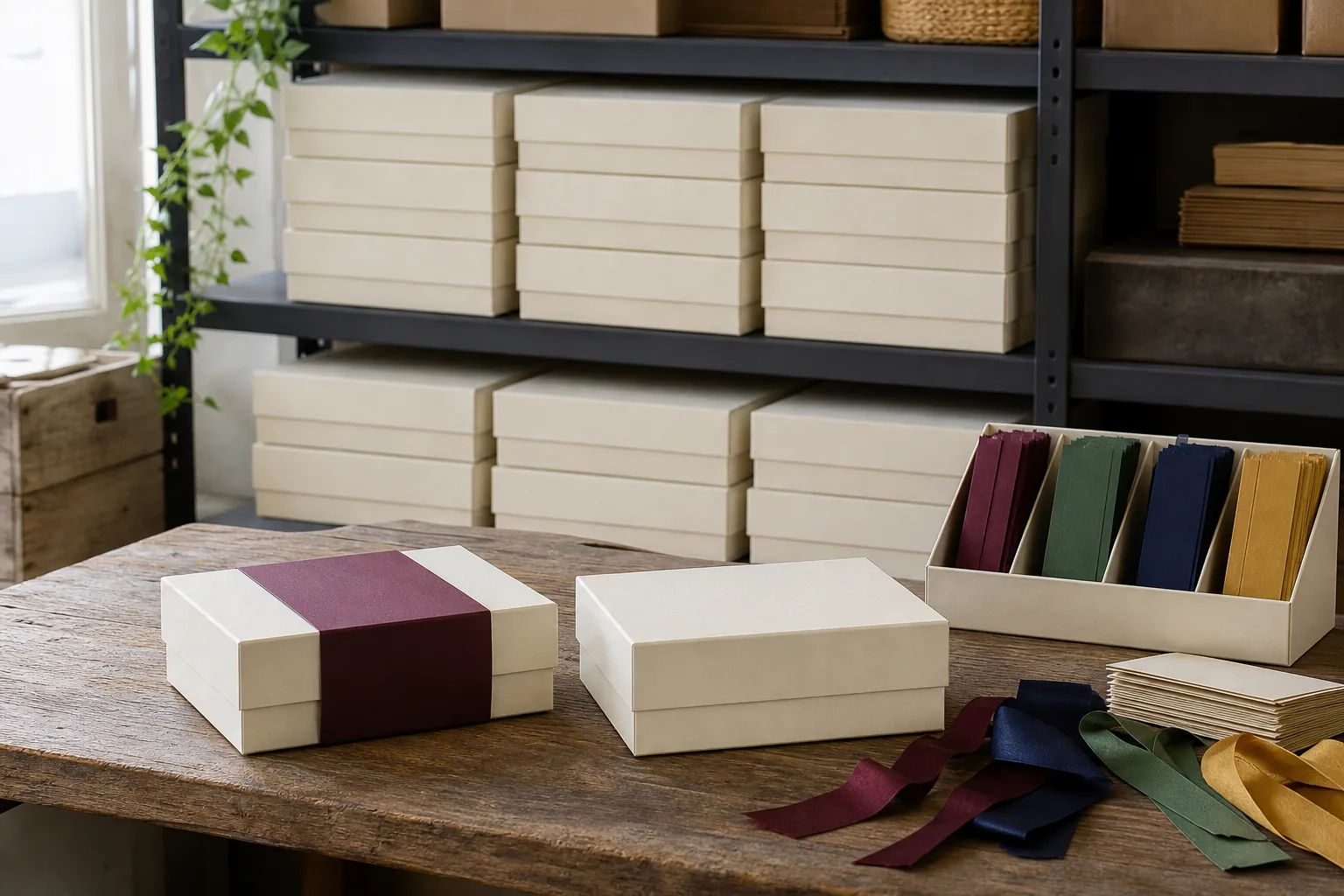
Design rules that preserve reuse
- Keep years and holiday names off the core box. Put them on removable print components.
- Use one permanent brand color for the shell and change accent colors by campaign.
- Reserve a fixed sleeve zone so every campaign uses the same dieline and packing motion.
- Use inserts as adapters when gift bundles change but the exterior can stay the same.
- Name files by component and revision so an old holiday sleeve cannot be paired with a new insert by mistake.
Unit price is not the only seasonal cost
Compare the landed and operational cost of the complete system: core box, seasonal component, insert, assembly time, freight cube, storage locations and expected write-off. A fully printed seasonal box may have a lower unit quote at a large quantity and still be the more expensive decision when unused units cannot be sold after the event.
Ask for quotes at the low, base and high demand cases. LuxoPack's rigid box MOQ starts at 100 pieces, but even at low MOQ, the modular route can be smarter when a brand runs several campaigns per year. See the custom gift box MOQ guide for why setup cost and volume tiers change the unit curve.
Plan the production calendar backward
- Freeze the bundle and core box size.
- Approve the seasonal artwork and dieline.
- Order a physical sample with the actual sleeve, ribbon and insert.
- Confirm bulk production and freight dates in writing.
- Set the latest safe reorder date before launch.
- Prepare the evergreen fallback on the product page and in the warehouse.
Do not print a generic promise such as "four-week turnaround" into the campaign plan. A confirmed schedule should account for sampling, artwork revisions, production, transport, customs and the actual launch location. For China sourcing around the holiday shutdown, the Chinese New Year 2027 packaging calendar gives a separate backward-planning framework.
Responsible sourcing claims belong in the artwork brief
If a seasonal sleeve or box should carry an FSC label, specify that before artwork approval. FSC states that on-product labels require the relevant certified supply chain and approval process. A designer should not download a logo and add it independently. Review the FSC on-product labeling steps with the certified supplier.
Build one box system for several campaigns
Send the core product dimensions, annual campaign calendar and expected quantity range. LuxoPack can quote an evergreen rigid box with interchangeable sleeves, inserts, cards or ribbons.
Plan my seasonal systemSources and community signal
The Reddit thread above is used as the buyer problem statement. Forecasting examples are transparent planning illustrations, not claimed market averages. FSC label guidance comes from the official source linked above.
Frequently Asked Questions
LuxoPack is an FSC-certified rigid box factory in Shenzhen (est. 2010), with custom rigid-box MOQ from 100 pieces. Related next steps: Holiday gift boxes, Magnetic rigid boxes, CNY production deadlines, Request a custom quote.