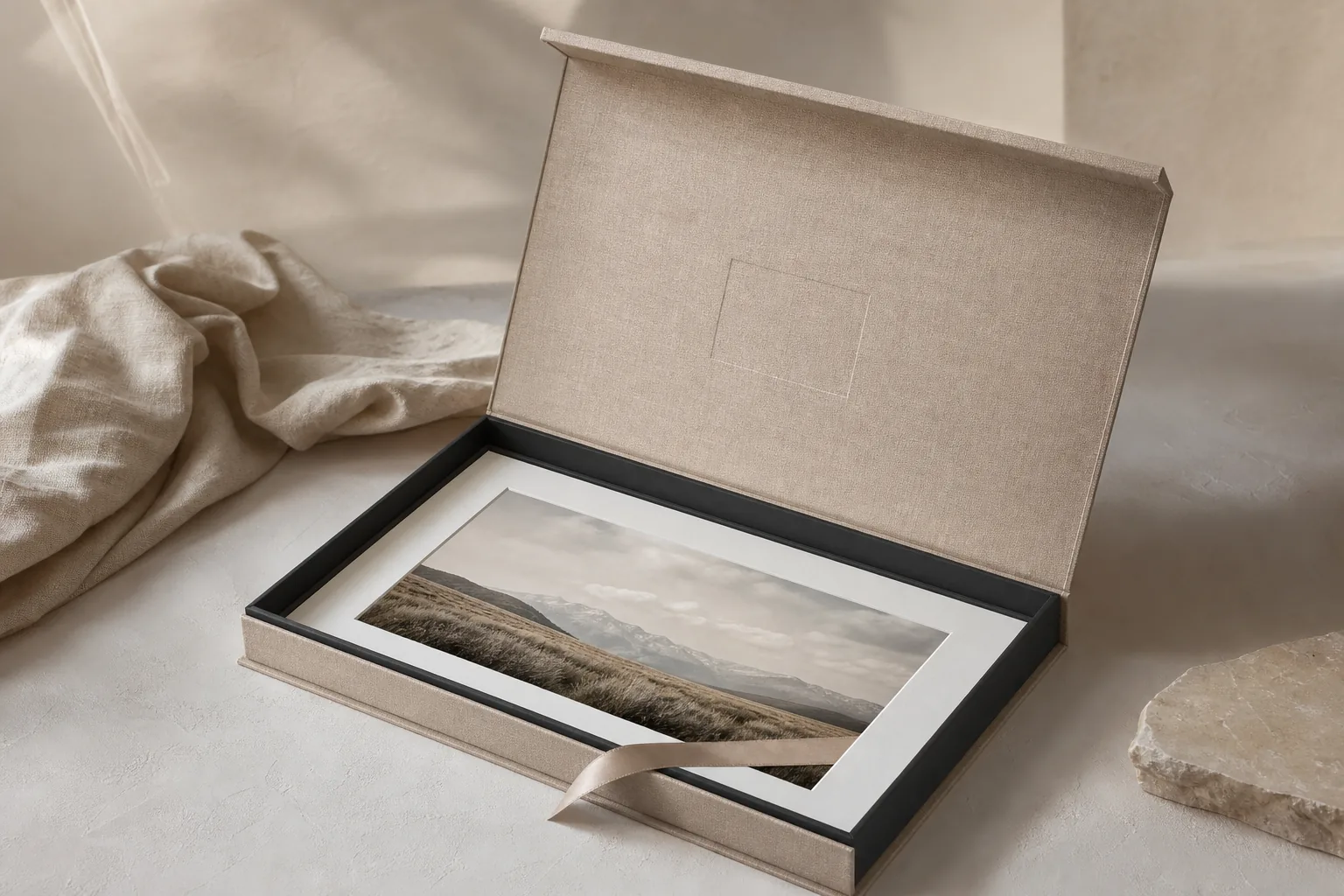
A recent r/smallbusiness discussion about high-end packaging asked for something unusually specific: a low-quantity linen presentation box with an embossed logo for framed art commissions. The buyer also needed changing sizes and did not want a warehouse full of packaging. That is not a generic "luxury box" problem. It is a standardization problem involving the wrap, board, insert, artwork size and outer shipping protection.
Short answer: use a shallow clamshell, magnetic book-style or lid-and-base rigid box; standardize one or two internal sizes; change the mat, insert, belly band or sleeve for each collection; and keep the presentation box separate from the corrugated shipping box. For the surface, specify whether you want actual woven linen, durable book cloth or linen-embossed paper. They are not interchangeable materials.
Start with the delivery moment, not the fabric swatch
A commissioned artwork can reach the client in three different ways: handed over in person, delivered inside a local courier parcel, or shipped through a parcel network. The same linen box can work for all three as the presentation layer, but it should not be expected to absorb crushing, rain or corner impacts by itself. For parcel delivery, place the finished presentation box inside a right-sized corrugated shipper with corner and face protection.
This distinction prevents a common sourcing mistake: adding more foam and thicker board to a beautiful box until it becomes expensive, bulky and still not an efficient shipping carton. Design the presentation box for repeat opening and clean client delivery. Design the shipper for handling hazards.
Three materials buyers call "linen"
| Surface | What it is | Strength | Watch-out |
|---|---|---|---|
| Natural woven linen | Textile laminated to a paper backing and wrapped over rigid board | Authentic fiber texture and warm, tactile presentation | Open weave can soften fine emboss detail and collect dust |
| Book cloth | Woven or coated cloth engineered for binding and wrapping | More predictable at corners, hinges and production seams | Ask whether it is natural fiber, synthetic or coated; appearance alone does not answer that |
| Linen-embossed paper | Specialty paper pressed with a fabric-like texture | Clean printing, consistent color and lower material cost | It is textured paper, not fabric; the quote and product description should say so |
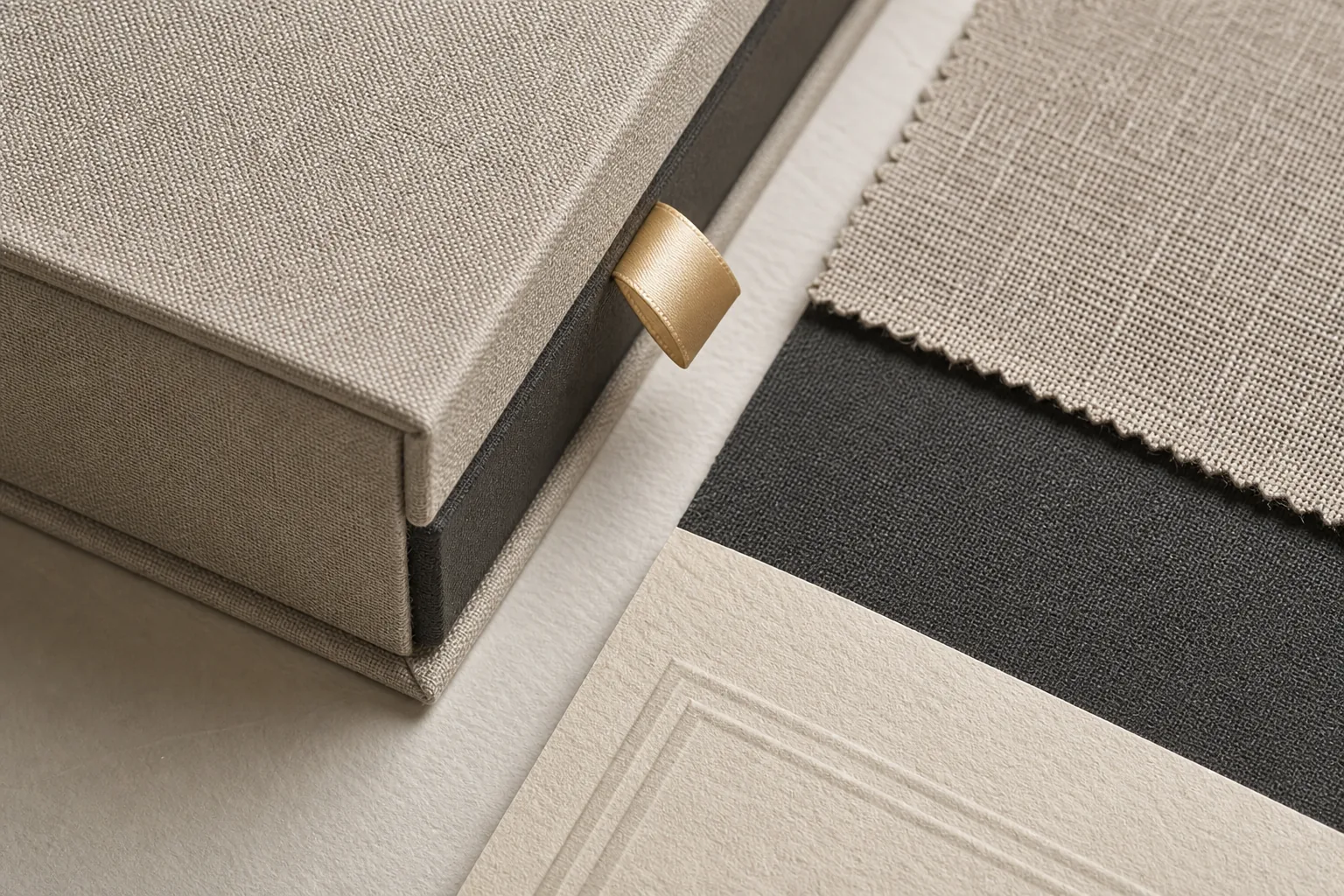
Request a labeled material card before choosing from a screen photo. The card should show the exact supplier code, color, backing and available roll width. For any claim such as recycled content or FSC-certified paper components, ask for the claim on the quotation and production documents rather than assuming it from the color or texture. Our certifications page explains what LuxoPack's FSC chain-of-custody certification does and does not cover.
Pick the box structure around the artwork format
How to measure the cavity without guessing
Measure the finished object, not the Illustrator artboard. Record maximum length, width, depth and packed weight. For a matted print set, also record the stack height under light compression. Start the internal cavity with enough finger clearance to lift the contents without bending an edge. Then build the insert or mat around that cavity.
For example, a 279 x 356 mm (11 x 14 in) matted print set that is 18 mm deep should not be dropped into an oversized stock box. A fitted platform can center it inside a standardized cavity, while a ribbon lift removes the need for a large finger notch. If the next collection is smaller, change the platform or mat rather than the whole rigid shell.
Logo finishing on cloth: sample the real combination
Blind deboss is the restrained option buyers often mean when they ask for an embossed linen box. It works best with a bold logo, wider counters and limited fine type. Hot foil produces cleaner contrast on many cloths but can reveal weave irregularity. A printed paper sleeve is the flexible choice for changing exhibitions, dates or artist names.
Approve a strike-off or wrapped corner sample using the actual cloth, logo die and board. A flat digital proof cannot show how a weave compresses, whether adhesive marks through, or whether the foil releases cleanly. The pre-production sample checklist covers the checks to record before approval.
A low-MOQ system for changing commission sizes
- Audit the last 20 to 50 jobs. Group the finished dimensions, not the artwork subjects.
- Choose one or two core cavities that cover most orders without excessive empty space.
- Standardize the rigid shell and cloth color. This is the expensive, slow-changing component.
- Personalize the insert, mat, sleeve or card. These flat components are cheaper to store and replace.
- Keep one physical golden sample for each core size, with approved cloth and emboss depth.
LuxoPack's custom rigid boxes start at 100 pieces. If an art business needs fewer than that for every size, the honest solution is not to create five fully custom shells. Use one standard shell and adapt the interior. Our low-MOQ packaging page shows the construction options available at the starting tier.
What to put in the RFQ
- Finished product or frame dimensions and weight
- Number of prints, mats, certificates or accessories per box
- Preferred clamshell, lid-and-base, drawer or portfolio structure
- Actual linen, book cloth or linen-embossed paper requirement
- Blind deboss, foil, printed sleeve or blank exterior
- Order quantity by size, destination country and required delivery date
- Whether the box is hand-delivered or needs a separate parcel shipper
Need a linen box built around your artwork?
Send the finished artwork or frame dimensions, quantity and a reference photo. LuxoPack can return a structure recommendation, material options and quote at 100 / 500 / 1,000 pieces.
Discuss my presentation boxSources and community signal
This article uses the Reddit thread above as a record of the buyer question, not as manufacturing proof. Material and production recommendations are based on LuxoPack's rigid-box workflow. For responsible paper sourcing and on-product label rules, see the Forest Stewardship Council's paper and packaging guidance.
Frequently Asked Questions
LuxoPack is an FSC-certified rigid box factory in Shenzhen (est. 2010), with custom rigid-box MOQ from 100 pieces. Related next steps: Lid-and-base rigid boxes, Sliding drawer boxes, Luxury packaging finishes, Request a custom quote.